Bohn refrigeration equipment serves demanding applications across food processing, cold chain, pharmaceutical, and commercial sectors worldwide.
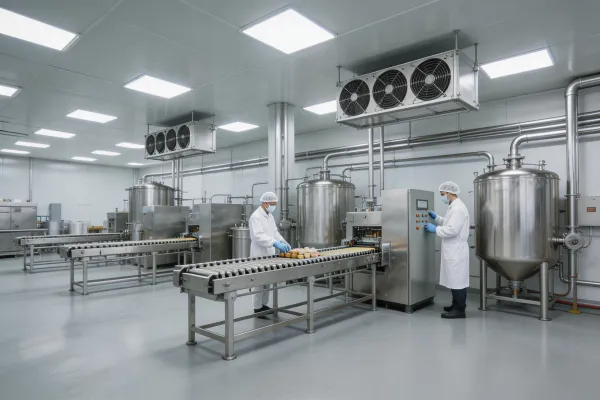
Temperature consistency is non-negotiable in food production. Bohn evaporators and condensing units are engineered to maintain precise temperature control from receiving docks through processing lines and into finished goods storage.
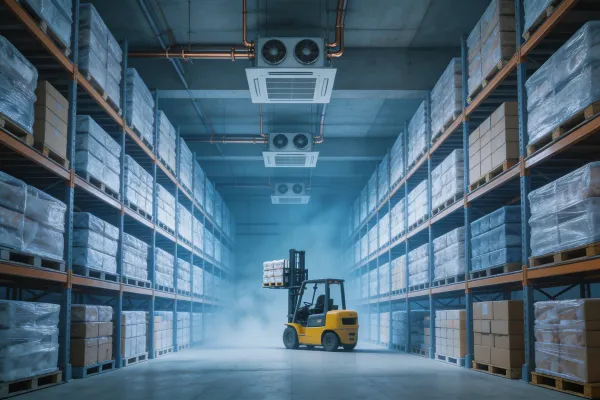
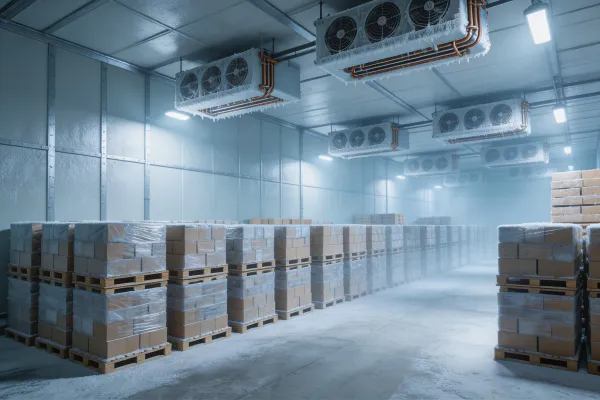
Distribution centers and cold storage warehouses demand refrigeration systems that operate reliably 24/7 while keeping energy costs manageable. Bohn provides equipment packages sized for facilities from 500 to 50,000 square meters.
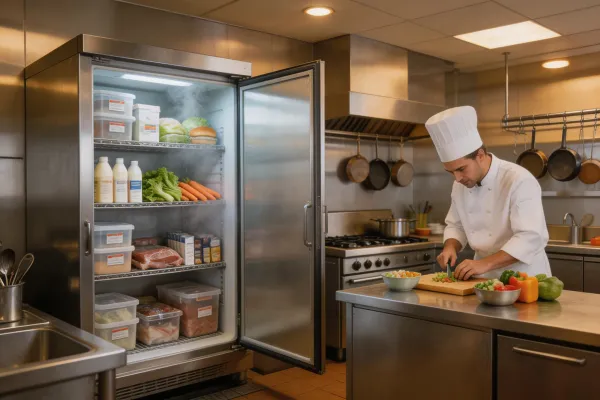
Restaurants, hotels, and catering operations depend on consistent cold storage performance in compact spaces. Bohn walk-in cooler and freezer packages deliver reliable cooling with minimal noise and a small installation footprint.
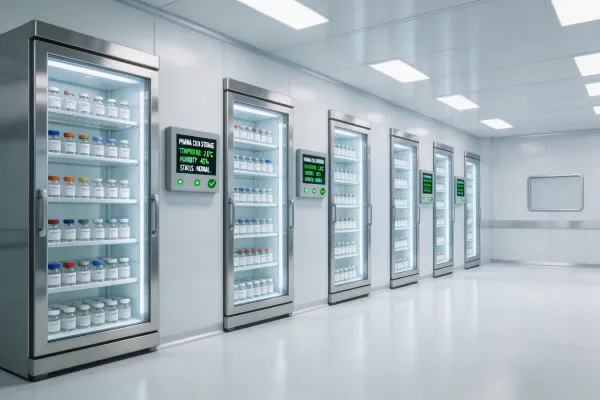
Pharmaceutical products require strict temperature maintenance with documented compliance. Bohn refrigeration systems provide the thermal stability and monitoring integration needed for validated cold storage environments.
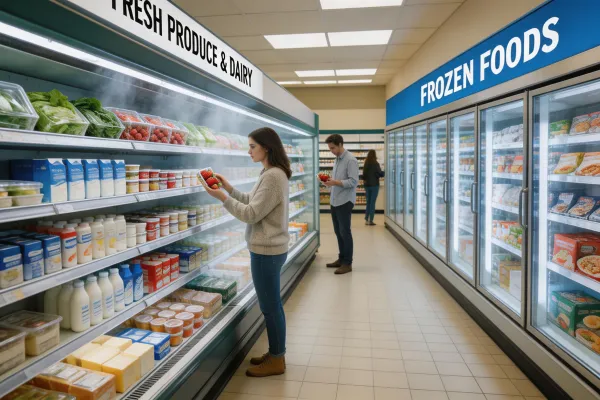
Supermarkets and grocery stores run complex multi-temperature refrigeration systems that must balance product preservation, energy costs, and regulatory compliance across hundreds of linear meters of display cases.
Large-scale freezer and cooler warehouses handling thousands of pallet positions need refrigeration systems that combine high capacity with energy efficiency and long service intervals.
Selecting the right refrigeration architecture depends on your facility size, load profile, redundancy requirements, and long-term expansion plans. Two common approaches each carry distinct advantages and limitations.
A single machine room with piped refrigerant or glycol distribution to multiple zones. Centralized systems typically achieve 10-15% higher overall COP because compressors run closer to their optimal loading point. Maintenance is concentrated in one location, and heat recovery integration is straightforward, with recovered energy often covering 40-60% of a facility's hot water demand.
Limitations: Higher upfront piping costs, especially for facilities exceeding 10,000 m2. A single-point failure in the plant room can affect all zones unless redundant compressors are specified. Refrigerant leak risk increases with longer pipe runs, a critical factor when using ammonia (R-717) where charge limits are regulated by ASHRAE 15 and local building codes.
Independent condensing units serving individual zones, each with self-contained refrigerant circuits. Distributed systems offer inherent redundancy: if one unit fails, other zones continue operating. Initial installation costs are typically 15-25% lower than centralized systems for facilities under 5,000 m2, and phased expansion is straightforward.
Limitations: Total energy consumption is generally 10-15% higher at part load compared to a well-designed centralized plant. Maintenance must be performed at multiple locations across the facility. Heat recovery is more complex to implement, and total refrigerant charge per unit of cooling capacity is higher.
The optimal architecture depends on factors specific to each project. Bohn engineers provide detailed load analysis and lifecycle cost comparisons for both approaches. For facilities between 3,000 and 8,000 m2, hybrid configurations combining a small central plant with satellite condensing units are increasingly common and can capture benefits of both architectures.
Representative project profiles illustrating how Bohn equipment is applied across different industry segments.
A 12,000 m2 pork processing facility in the U.S. Midwest required refrigeration across four temperature zones: +4C receiving, -2C processing, -25C blast freezing, and -18C finished goods storage. Bohn supplied 14 unit coolers (ranging from 8 kW to 85 kW cooling capacity) paired with six outdoor condensing units using R-448A refrigerant. The system achieved a measured COP of 2.8 at the -25C blast freezer zone and 4.1 at the +4C receiving dock, with total connected power of 340 kW and annual energy consumption approximately 15% below the ASHRAE 90.1 baseline for comparable facilities.
A 6,500 m2 pharmaceutical distribution warehouse in the Netherlands needed +2C to +8C controlled storage with temperature mapping validation per EU GDP guidelines. Bohn provided eight low-profile unit coolers with stainless steel construction and redundant condensing units in an N+1 configuration. Temperature stability measured during the 72-hour validation protocol was within ±0.3C across all mapped positions. The system integrates with the facility BMS via BACnet, providing continuous temperature logging and automated alarm escalation to on-site and remote personnel.
A 28-store supermarket chain in Southeast Asia transitioned from R-404A (GWP 3,922) to R-449A (GWP 1,397) across its refrigeration fleet over a 14-month period. Bohn supplied replacement evaporator coils and condensing units validated for R-449A operation. Post-retrofit measurements showed a 3-5% improvement in energy efficiency compared to the original R-404A systems, attributed to the thermodynamic properties of R-449A and concurrent EC fan motor upgrades. Total refrigerant GWP reduction across the chain was approximately 64%.
Our engineering team has designed systems for chemical processing, data centers, floral storage, and dozens of other niche applications. Tell us about your project and receive a preliminary system concept within five business days.
Contact Our Engineering Team